Speaking at the Anuga food industry trade fair last week in Cologne, Germany, Filippo Roda, senior market analyst at agri-food intelligence firm Arete, warned that five years of compounding disruptions have left agricultural markets with little buffer against future shocks and may have established a permanently higher price floor for many commodities.
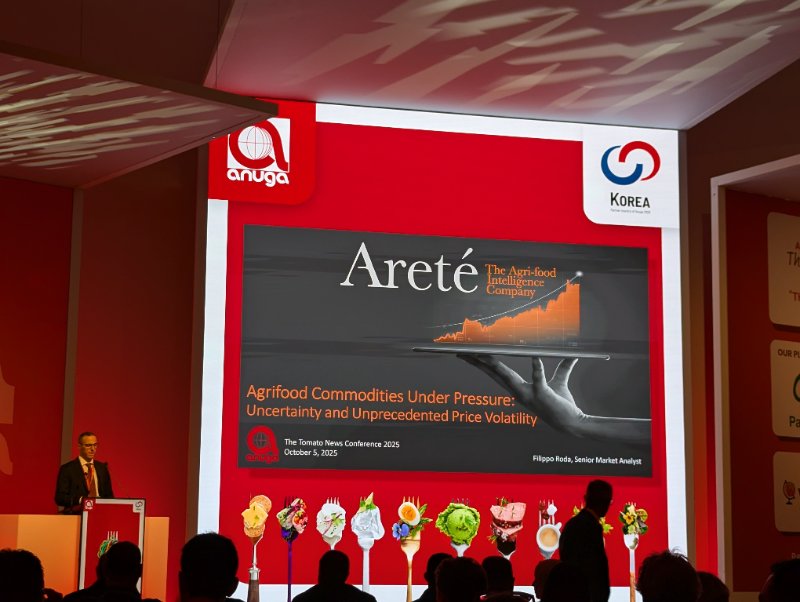
"Markets still have a high degree of fragility, a high degree of vulnerability and they are exposed to other new unpredictable shocks," Roda told conference attendees. "For the next marketing year, for most commodities, there are still no conditions for a full normalization."
Global stocks of coffee are forecast to be 36% below 2019-2020 levels in the current marketing year, while olive oil stocks remain 35% lower and butter stocks are down nearly 30%, according to data presented at the conference. Even grains like wheat and corn, which have seen some recovery, remain 11% and 10% below pre-crisis inventories respectively.
The depletion of global stocks has coincided with extraordinary price volatility. Coffee prices have surged 307% since September 2019, while cocoa is up 189% and palm oil has jumped 370% over the same period. Though some commodities have retreated from peak levels reached in 2022-2023, prices for most remain substantially elevated.
"After such shocks, production takes time to recover and often remains well below pre-event levels for several years," Roda said, citing a 40% collapse in European Union olive oil production in 2021-2022 and a more than 50% drop in Canadian durum wheat output the same year.
The prolonged market disruption stems from an unprecedented convergence of supply and demand shocks since mid-2020, Roda explained. Climate change has intensified weather extremes in key producing regions, while animal disease outbreaks like avian flu have hammered egg production. The European energy crisis dramatically raised costs for energy-intensive food processing and for crops used in biofuel production.
Trade disruptions have compounded production problems. Blockages at the Suez Canal, congestion at European ports and low water levels in major waterways have created supply bottlenecks. Currency swings have altered regional competitiveness, while policy interventions including export bans, tariffs and environmental regulations have increased market complexity.
The combination has resulted in stark regional price divergences for identical commodities. Within Italy, olive oil prices command record premiums over Spanish product due to constrained Italian production and consumer loyalty to domestic brands despite abundant Spanish supplies.
"We have diverging price trends, diverging effects depending on regions," Roda said.
Energy and input costs remain stubbornly elevated. European natural gas prices currently trade at 30-35 euros per megawatt hour, more than double the 10-15 euro range of 2018-2020, Roda noted. Fertilizer costs are still 50% above pre-crisis levels.
The analyst said demand for agricultural products has proven relatively inelastic, meaning supply disruptions translate directly into price spikes. However, after several years of food inflation, some demand destruction may help rebalance markets in the medium term.
"Market rebalancing will mainly depend on the recovery of supply," Roda said. "It will take time - multiple surplus marketing years to restore stocks."
