Blake McClendon put the idea to about 200 large growers at a dinner on 23 September during the Brazilian Cotton Congress in Belo Horizonte, according to a statement from the host, ORÍGEO, Bunge's joint venture with Indian agrochemicals group UPL.
The statement described the benchmark as a "possibility" that would complement rather than replace the US contract.
"Brazilian cotton today has one of the most sophisticated origin infrastructures in the world, but its main benchmark is physically tied to American cotton," McClendon said, according to the statement.
Most Brazilian cotton is priced and hedged against the Cotton No. 2 contract on ICE Futures U.S., the statement said. The contract's specifications list "US Origin only" as the deliverable origin, with delivery at five US locations. ICE will add a sixth, Savannah, Georgia, from the October 2028 expiry.
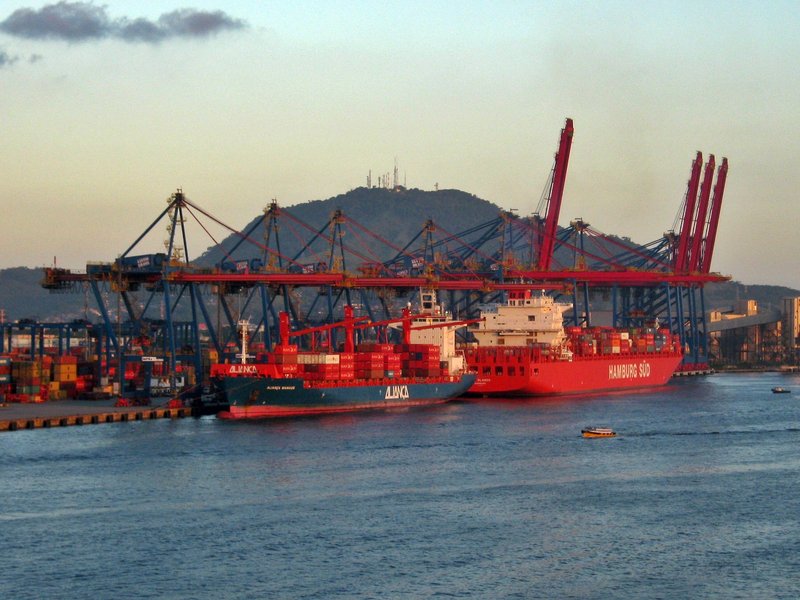
Brazil exported a record 3.37mn tonnes of raw cotton in the 12 months to July, up 19 per cent, according to Brazilian customs data accessed via Cropli. The United States shipped 2.71mn tonnes over the same months, US Census Bureau figures show, leaving Brazil a quarter ahead.
Brazil overtook the United States in 2023/24 and has raised its share of world exports to 34 per cent in 2025/26 from 7.3 per cent in 2016/17, according to US Department of Agriculture estimates. Growers' association Abrapa expects exports to slip to 3.1mn tonnes on a smaller crop.
McClendon's case rests on forward buying. A merchant that buys Brazilian lint, the ginned fibre, ahead of delivery and sells ICE futures against it is covered for moves in the US price but not for changes in basis, the gap between a local cash price and the futures.
"When you ask us to buy cotton two years ahead, we have to price that risk somewhere. Every risk the merchant can't hedge ends up, in the end, in the price paid to the producer," he told the growers.
Brazilian growers had sold 60 per cent of their 2026/27 crop forward by March, according to Abrapa figures cited by the USDA's post in Brasília.
TARIFFS PULL ORIGINS APART
Tariffs have pulled the two origins apart. US cotton exports to China fell to 145,000 tonnes in 2025/26 from 1.01mn tonnes in 2023/24, Census data show, while China took 772,000 tonnes of Brazil's cotton.
"While Australian and U.S. cotton maintain a recognized quality premium over those sourced from Brazil, the 10 percent tariff on U.S. origin cotton has rendered it uncompetitive," the USDA's Foreign Agricultural Service post in Beijing said in April.
The front-month New York contract averaged 85 US cents per lb in August, up 9.7 per cent from July on worsening US crop conditions, Itaú BBA's agribusiness consultancy said, as reported by CNN Brasil. The CEPEA/Esalq indicator for lint delivered in São Paulo rose only 2.3 per cent in dollar terms from July to August, to 82.2 cents, CEPEA data show.
The Cotlook A Index, an average of offers for cotton delivered to Far East ports, stood 13.5 cents above the Brazilian indicator, the widest monthly gap this year and up from 5.3 cents in June, according to CEPEA and World Bank data accessed via Cropli.
Part of that gap is freight to Asia and part is seasonal: CEPEA has noted that Brazilian prices typically sit below international levels while the new crop is being processed. Even so, the two series have averaged 7.6 cents apart since 2018, compared with 1.4 cents between 2010 and 2017, when the gap swung more widely from month to month.
"WHICH COTTON AND WHERE"
McClendon's design keeps the mechanics of the US contract. "We don't need to reinvent what already works. We only need to change two things – which cotton and where: Brazilian cotton, classed by Abrapa's system, delivered to certified warehouses," he said.
The statement names the Port of Santos as the delivery point. The port handles about 97 per cent of Brazil's cotton exports, according to the USDA.
On 1 October, eight days after the dinner, StoneX and Cotlook announced an over-the-counter, or off-exchange, Cotlook Brazil Basis Swap referencing the Brazilian component of the A Index.
"These OTC derivatives will allow them to hedge a significant portion of their price risk that was previously unhedged," said Brett Phillpott, global co-head of commercial hedging and commodities at StoneX.
EXCHANGES HAVE TRIED BEFORE
ICE launched a World Cotton contract in November 2015, deliverable from nine origins including Brazil, after years of lobbying by merchants who argued the US contract did not represent world cash prices.
Brazil's own exchange, B3, has a mixed record. Its predecessor, the BM&F, suspended a domestic cotton future after 2000 because it was graded on lint from Paraná and São Paulo rather than the better fibre of the Cerrado, the central savannah belt where most of the crop now grows.
B3 did launch a Brazilian soybean future with CME Group in November 2021, cash-settled against a Santos export price rather than delivered.
Bunge became a large cotton merchant in Brazil through its acquisition of Viterra, completed in July 2025. About six weeks before the deal closed, ED&F Man hired more than 10 traders from Viterra as it moved into cotton, among them Viterra's global trading manager for cotton, Bloomberg reported at the time.
"With the Viterra acquisition, Bunge staked out its position in this market and has a very big ambition: together with us, to be the cotton leader in Brazil," ORÍGEO chief executive Roberto Marcon said in the same statement.
B3, ICE, Abrapa and rival merchants have not commented publicly on the idea. Abrapa president Gustavo Piccoli, opening the congress the day before the dinner, called on the next federal government for an agricultural policy with "credit, rural insurance and risk-management instruments better suited to reality".

