US rough rice futures on the Chicago Mercantile Exchange fell to $10.72 per hundredweight this week, down nearly 38% from 2023 levels, as abundant supplies overwhelm demand. The benchmark contract, which tracks paddy rice before milling, last traded at these levels in 2019.
The price slump comes amid a wave of protectionist measures that has exacerbated the downturn. The Philippines, the world's largest rice importer, extended its temporary import ban through the end of 2025 after initially implementing a 60-day suspension in September. Panama set the trend in July with Executive Decree 14, which effectively closes its market to imports between June and December.
Both measures cite the need to protect local farmers from depressed prices caused by excess supply. Philippine Agriculture Secretary Francisco Tiu Laurel told lawmakers the country had imported an excess 800,000 tonnes by September, driving farmgate prices for unmilled rice below production costs.
Global rice production is tracking toward a record 541.5 million tonnes (milled basis) for the 2025/26 marketing year.
The US Department of Agriculture forecasts India, the world's top exporter, will produce 151 million tonnes of milled rice, up 1 million tonnes from the prior year's record. Indian government stocks stood at 55.7 million tonnes in July, more than four times the country's mandatory buffer requirement.
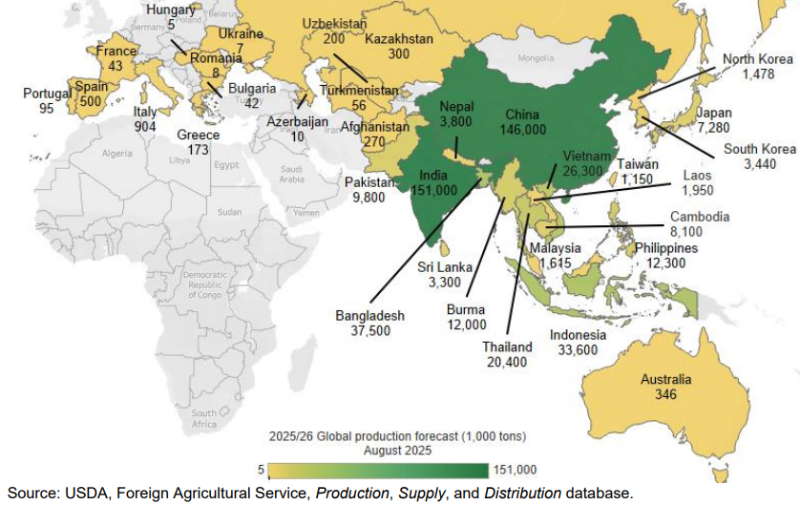
The Philippines itself achieved record rough rice output of 4.38 million tonnes in the second quarter of 2025, the highest quarterly production since 1987, according to USDA data. For the full marketing year, Philippine rough rice production is forecast at 19.68 million tonnes, supporting 12.4 million tonnes of milled rice output.
China's milled rice production remains stable at 146 million tonnes for 2025/26, while Thailand is projected to produce 20.7 million tonnes of milled rice despite a 27% decline in exports during the first half of 2025. Vietnam, which captured 81% of Philippine imports in the last marketing year, has seen export prices plummet 32% year-on-year to $372.10 per tonne by October.
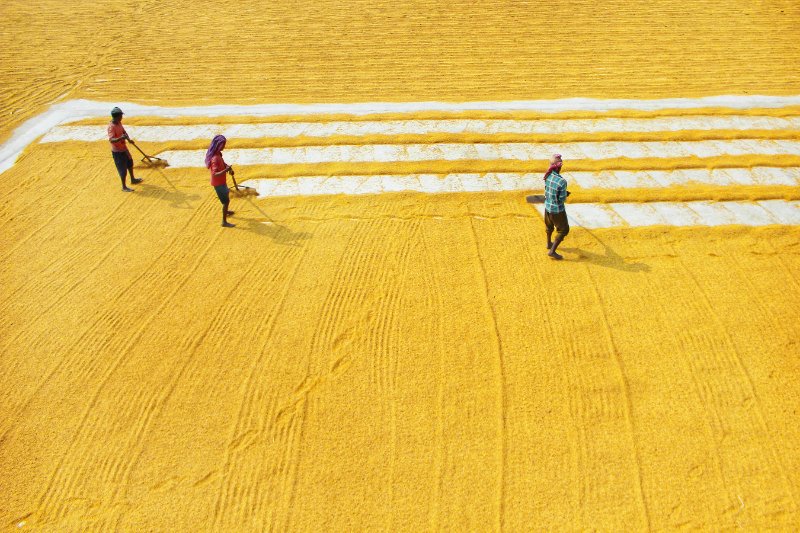
The pricing pressure reflects a market awash in supply even as crop shortfalls create regional pockets of scarcity. India's July 2023 ban on non-basmati white rice exports -which initially sent prices surging up to 32% in some markets - has given way to a global glut as other producers ramped up output to fill the gap.
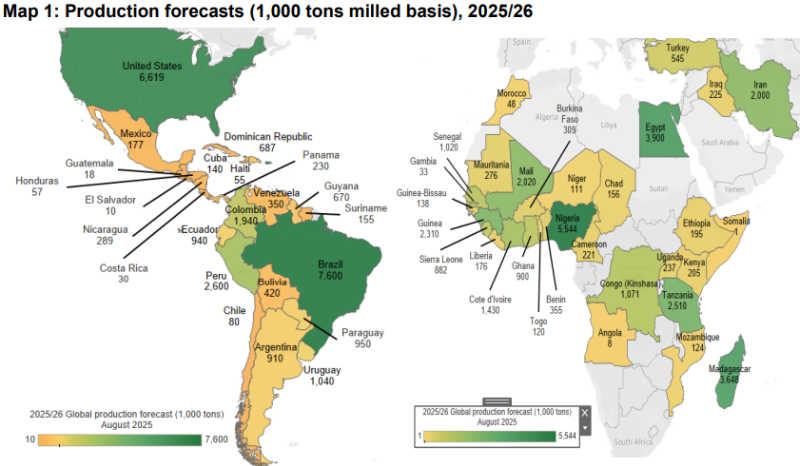
Pakistan represents the major production shortfall, with flooding since mid-August damaging crops and reducing milled rice output forecasts to 8.0 million tonnes for 2025/26, down 18% from earlier projections. But the roughly 2-million-tonne shortfall is easily absorbed by surplus production elsewhere.
The Philippines' predicament illustrates the bind facing rice-dependent nations. Despite extending its import ban to support farmers earning below-cost returns, the country will still require 5.0 million tonnes of imports in the 2025/26 marketing year, according to USDA estimates. The government plans to allow a brief import window in January to bring in at least 300,000 tonnes before reimposing restrictions through April.
Meanwhile, Egyptian milled rice production surged 7.7% to 4.2 million tonnes as farmers shifted from corn, while Nigerian production slipped 5.5% to 5.49 million tonnes of milled rice. Bangladesh, facing record-high domestic prices despite good harvests, increased its import forecast to 1.2 million tonnes.
The market fragmentation is forcing traditional trade flows to realign. Vietnam and Thailand, which together supplied roughly 90% of Philippine imports, face mounting inventories with limited alternative buyers. Chinese import restrictions on corn and wheat - part of Beijing's push for food self-sufficiency - have further constrained Asian grain trade.
"Industry sources indicate that there is no need to import grains for at least two years," contacts cited by USDA said in reference to China, underscoring how deeply the surplus has penetrated even major consuming markets.
The question facing markets is whether current price levels will discourage planting for the next crop cycle, or whether government support programs in major producers will sustain output and extend the supply glut into 2026.

