Guayaquil, Ecuador's main port, recorded 63.2mm of rain in the month to Sept. 23, beating the previous September high of 18.9mm set in 1983, according to the national meteorological institute, Inamhi. The monthly normal is 0.7mm.
September 1997, at the start of the El Niño that devastated the coast in 1997-98, brought 11.7mm.
"September 2026 becomes the wettest September recorded in Guayaquil since 1961," Vladimir Arreaga, Inamhi's director of forecasts and hydrometeorological alerts, said on Sept. 23, according to Expreso.
The rain has fallen even heavier inland. In Los Ríos, the province at the centre of the cocoa belt, Inamhi's Pichilingue station outside Quevedo had recorded 129.3mm by mid-month, almost six times its September normal, Primicias reported on Sept. 15.
At Cropli's monitoring point near Quevedo, 350mm fell in the first 23 days of the month, more than eight times any full September from 2017 to 2025, according to ERA5 reanalysis data accessed via Cropli. Near Chone, in the Manabí cocoa country to the north-west, 239mm fell, six times the wettest of those Septembers.
Warmer temperatures caused by El Nino mean downpours are more intense due to increased evaporation and concentration of water vapor in the atmosphere.
About 90 per cent of Guayaquil's total fell on two days, Sept. 10 and Sept. 23. Ecuador's national El Niño committee, CN-Erfen, said on Sept. 19 that rain in the first half of the month ran above normal in the north, centre and interior of the coastal region but below normal in the south and along parts of the shoreline, describing the response as still irregular.
FLOWERING AT RISK
The downpour threatens Ecuador's cocoa trees that give two harvest peaks, one from August into October and another in March and April.
Growers around Babahoyo, in Los Ríos, told the local outlet Si Se Puede Ecuador that if the rain persists towards the end of the year, waterlogged soils and disease could damage the flowering that produces the March-April crop.
Excess rain knocks the flowers off the trees, Iván Ontaneda, president of the exporters' association Anecacao, told Primicias in June.
"Cocoa needs sun, less water. If we have more water, the more it gets damaged," Teófilo Briones, a grower at La Chontilla, outside Babahoyo, told Si Se Puede Ecuador. For now, the rain has let growers put off irrigating and save on fuel.
A plantation that normally yields 30 quintals of 100lb a hectare could fall to 10 to 15 quintals if the adverse conditions persist, a grower at Febres-Cordero, near Babahoyo, told Si Se Puede Ecuador.
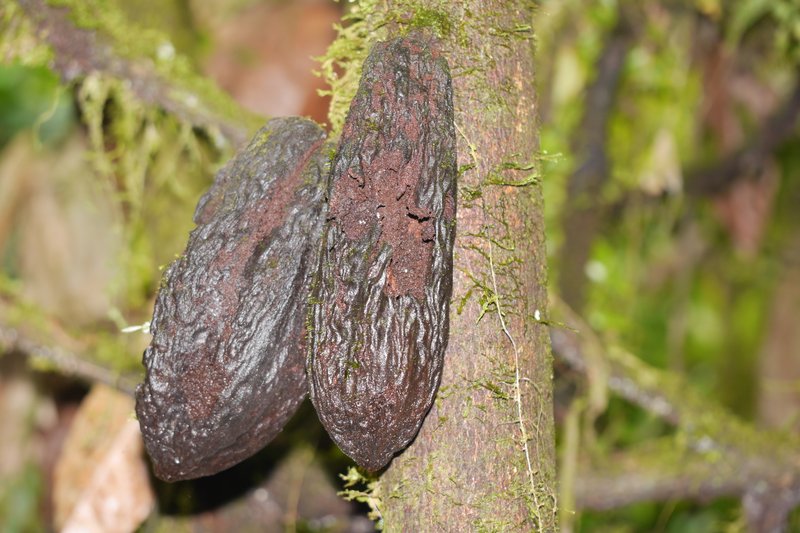
Babahoyo Export, which buys from about 2,000 growers, mostly in Los Ríos, said losses could reach around 15 per cent if the atypical conditions continue, mainly through frosty pod rot, the fungal disease known locally as monilia. Beans with that damage lose quality and can fail export standards, the outlet reported.
"And when there is lower quality, that cocoa cannot be exported, because there are minimum compliance requirements abroad," Ontaneda told Primicias in June.
Anecacao has warned that heavy rain could also bring black pod, witches' broom and dieback and make harvested beans harder to dry, with effects running into next year. It is watching Guayas, Manabí and Esmeraldas.
Manabí, Los Ríos and Esmeraldas account for 57.1 per cent of Ecuador's cocoa output and Guayas for 15.1 per cent, according to national statistics institute data cited by Primicias. Anecacao has not yet estimated how many hectares could be affected.
1997-98 PRECEDENT
The last time El Nino significantly disrupted South America's cocoa industry harvests collapsed.
The 1997-98 El Niño cut cocoa output by 61.5 per cent, to 35,006 tonnes in 1998, according to FAO data accessed via Cropli. A 1998 damage assessment by the UN Economic Commission for Latin America and the Caribbean and the development bank CAF estimated 57,083 tonnes of cocoa lost.
Coffee and cocoa were damaged "because the rains came at the time of their flowering", it said.
Strong events do not always bring the rain. In Manabí, the 2015-16 El Niño brought 1,264mm over the year, almost exactly the normal, Inamhi's acting director, Pablo Cornejo, told El Universo. FAO data show Ecuadorian cocoa output fell 1.5 per cent in 2016, though DatamarNews put the decline for the 2015/16 crop year at 11.1 per cent.
NOAA's Climate Prediction Center puts a 75 per cent chance on "a historic event that would exceed the strength of previous El Niño events dating back to 1950" in October to December. Inamhi expects rain to come more often along the coast through October, with the heaviest falls in November and December and continuing into early 2027.
SMALLER, CHEAPER CROP
The rain has affected a crop that is already smaller and worth less. Ecuador's exports of cocoa and cocoa products fell 8.3 per cent to 263,137 tonnes in the first seven months of this year, according to the country's central bank, and their value more than halved to $1.2bn.
Anecacao attributes part of the volume fall to the trees' natural cycle after years of heavy harvests. In late August the central bank projected full-year exports of about 650,000 tonnes, up 9.2 per cent.
Ecuador was the largest supplier of US cocoa bean imports by value in 2024 and 2025, according to US Census Bureau data accessed via Cropli. In January to July it slipped to second, with 18.5 per cent against Côte d'Ivoire's 51.9 per cent, the Census data show.
The World Bank's cocoa benchmark averaged $5,950 a tonne in August, up from $3,240 in March but down from $10,750 in January 2025. Cocoa closed at $5,307 a tonne on Sept. 21, according to Investing.com figures cited by Primicias.
Citi cut its estimate of Ecuador's production by 25,000 tonnes in June, alongside larger cuts for Côte d'Ivoire and Ghana, DatamarNews reported.
José David Rivera, an economic analyst, told Primicias that cocoa could fall towards $5,000 a tonne, or even near $4,500, between late October and November, but did not rule out a rebound in the first quarter of 2027 if El Niño proves more intense than expected.

