Prices for the benchmark 400 GPL cloudy concentrate have recovered from lows of $1,000 per tonne last year and are expected to climb to $2,500 by the start of the 2026 harvest season in March and April, according to interviews with executives from FGF Trapani and Citrusvil at the Anuga food trade fair in Cologne.
The rebound marks a turnaround for Argentina's lemon processors, who spent years clearing excess inventory that accumulated after COVID-19 lockdowns hit demand in 2020 even as factories continued producing.
"Last year, prices were down at $1,000 [per tonne]. Small players that didn't have the financial backing were even offering $950 because if not, they didn't have cashflow and faced bankruptcy," said the exec at Citrusvil, one of Argentina's largest lemon producers processing 300,000 tonnes of lemons annually.
"Nowadays, prices are more like $2,000 and customers say, 'Oh my God, it's double,'" he told Cropli.
Argentina is the world's leading lemon producer alongside Spain, with processors expecting to handle approximately 1.5 million tonnes of fruit in the upcoming season. The country holds a counter-seasonal advantage, harvesting from March to September while Spain produces from October to March.
Last year, the US imported 182,000 tonnes of frozen lemon juice, the highest volume in over a decade, with two-thirds, or 96,000 tonnes, coming from Argentina.
Trapani, a top-four producer processing 100,000 tonnes of lemons annually, said it has completely sold out of this year's production due to surging demand.
"We have had very large demand this year," an exec at Trapani, told Cropli. "Now we are sold out of lemon juice."
The price recovery has been aided by tightening European supply, with Spanish producers expecting 30% lower production for the season that just began, the Citrusvil executive said. This has redirected demand toward Argentine suppliers.
The multi-year inventory overhang began in 2019 and worsened when the pandemic struck in 2020. Processors continued operating for months at a time once production started, creating mounting stocks even as beverage consumption suffered.
"When we turn on the electricity at the factory, we start and then we don't stop for six months," he said. "So more stock, more stock, more stock, but no demand."
With juice concentrate having a three-year shelf life, processors were forced to slash prices to clear inventory before it expired. At last year's SIAL Paris trade show, Citrusvil offered steep discounts to eliminate remaining carryover stock.
"It was cheap, but we sold it all. So this year, we start afresh," the executive said.
While current prices around $2,000 represent a doubling from last year's crisis levels, they remain below the $3,000 per tonne levels that prevailed before the pandemic.
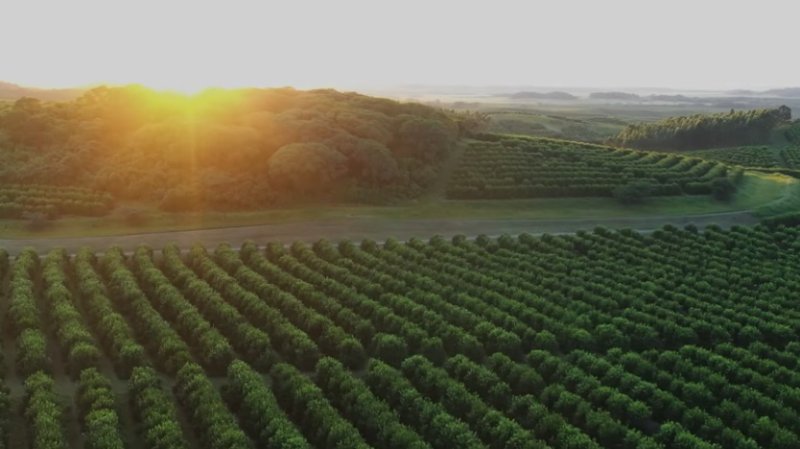
Argentina's lemon juice production is dominated by four giants - Citrusvil, Trapani, San Miguel Citromax, and Litoral Citrus. The companies operate thousands of hectares of lemon orchards in Tucuman, Argentina's principal growing region.
Argentina's lemon juice is used primarily in carbonated soft drinks, lemonades, and as an acidifying agent in various beverages. The country's processors also produce lemon oil, dehydrated peel for pectin production, and pulp cells as byproducts.
