Polish volume of apple juice above 20 Brix, the concentrate trade, fell from 179,000 tonnes in 2022 to 99,600 tonnes in 2025, cutting Poland's share of EU import volume from 34.2 per cent to 23.0 per cent, according to Eurostat figures accessed via Cropli. China went from 7,100 tonnes to 66,100 tonnes over the same four years to become the bloc's second-largest supplier, on 15.3 per cent. The series counts shipments between member states alongside those arriving from outside the EU.
Poland's euro receipts barely moved as that volume halved: €205.0mn in 2025 against €214.1mn in 2022. The average EU import price rose from €1.20 a kilo to €1.95 over the same period, absorbing the entire volume loss in price.
China's gains in Europe come as its total exports shrink. Chinese concentrate exports fell about 28 per cent to 383,240 tonnes in 2025, according to the annual report of Yantai North Andre Juice, one of the two companies that dominate the Chinese industry. US orders “stalled” after tariffs of 55 per cent, later cut to 45 per cent, an executive at a major Chinese exporter told Cropli at the Anuga trade fair in October 2025. America has historically been China's largest concentrate market.
Poland's largest processor is itself Chinese-owned. SDIC Zhonglu Fruit Juice, a state-controlled company listed in Shanghai, bought Appol Group in December 2018. Appol runs three plants in the main growing areas and accounts for roughly 70 per cent of Polish concentrated juice output.
Poland's Central Statistical Office put this year's apple crop at about 3.1mn tonnes on 3 August, down 19.5 per cent, in its first preliminary estimate of the season. GUS named late-April frost damage to blossom and young fruitlets as the largest single cause, followed by insufficient May rainfall and heatwaves at the end of June.
Both weather stages appear in Cropli's six monitoring points across the Grójec and Sandomierz orchard belts. May rainfall at Belsk Duży was the ninth lowest for the month since 1940 and at Grójec the tenth, though Warka, 30km east, was normal. Temperatures then held above 32°C for six consecutive days to 1 July and peaked at 38.2°C at Grójec on 28 June, the highest reading of the season and squarely at fruitlet sizing.
Poland accounts for 31 per cent of EU apple production, and the rest of northern Europe has failed alongside it this year. The Dutch crop is forecast down 18 per cent and Greek lowland orchards about 30 per cent on poor fruit set.
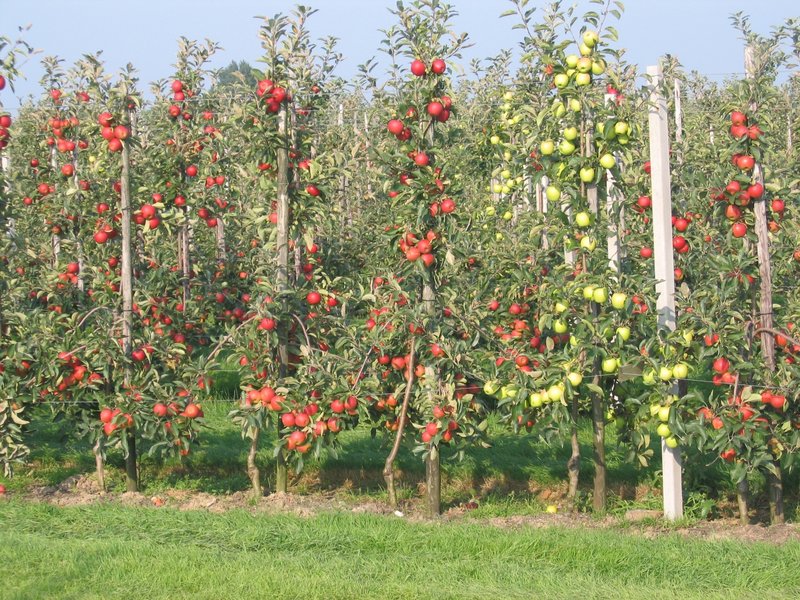
Poland's share has recovered this year on last season's fruit, to 28.0 per cent of EU import volume in January to May from 20.7 per cent a year earlier. That window closes before the 2026 crop reaches processors, and prices across it fell: the average EU import price was €1.77 a kilo, down from €2.05.
Processing apples are cheaper than in either of the past two years despite the smaller crop. Growers in the Grójec basin were being paid 0.60 to 0.63 zloty a kilo for hand-thinned fruit in mid-July, against about 0.65 zloty in 2025 and 0.75 zloty in 2024, according to the trade publication Sad24.
Mirosław Maliszewski, president of the Związek Sadowników RP growers' association, put this year's crop at no more than 2.5mn tonnes in May. “If there is no cheap offer, other suppliers may take over the market,” he told Kobieta w sadzie on 21 May.
Rain over the 30 days to 5 August ran at 33 per cent of the 1991–2020 norm at Sandomierz and 69 per cent at Błędów, and Cropli's crop-stress model forecasts all six Polish points into drought alert between 7 and 21 August, Belsk Duży reaching its extreme threshold. ECMWF's seasonal model puts August 2.2°C above climatology at Grójec and 2.8°C at Sandomierz, and dry at both. IMGW, the Polish meteorological service, issued 61 hydrological drought warnings covering about half the country in July and its highest-level heat warning over both apple belts on 1 August.

