At Petropavl, in North Kazakhstan oblast, night minima averaged 20.3°C over the seven days to 3 August against a 1991–2020 normal of 14.2°C — 3.4°C hotter than the warmest equivalent week since the daily record began in 2021, according to ERA5 reanalysis data accessed via Cropli.
The anomaly is not belt-wide. Of the six monitoring points above 50°N, three breached their 90th percentile on night minima — Petropavl, Kokshetau in Akmola and Pavlodar in the east. Kostanay, one of the largest flax-growing oblasts, did not, at 2.9°C above normal, and two points in the west were unremarkable.
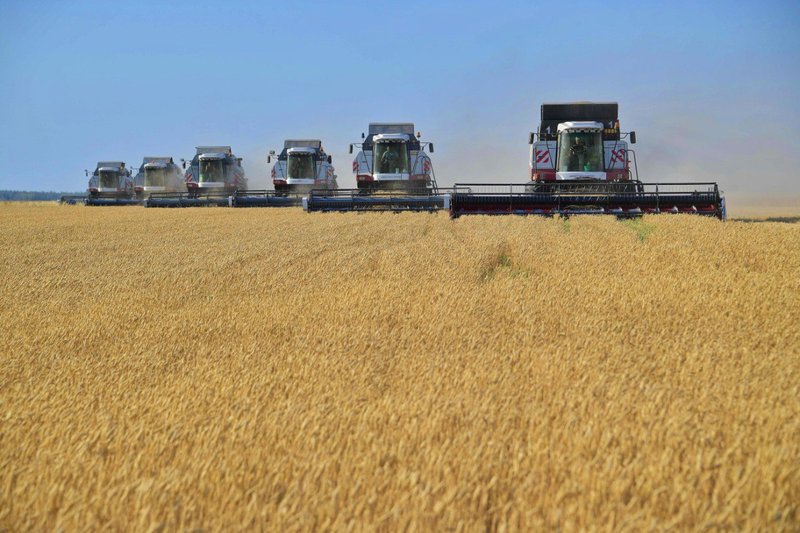
Mid-August is when oil content in the seed rises fastest, and cool nights are ideal for it, according to agronomic research compiled by Cropli. The same research pairs a heat wave during mid seed fill with oil content cut by 8 to 15 per cent, an altered fatty acid profile and lower omega-3. The risk is to oil content and quality, not tonnage.
There is no drought to compound the hot nights. Rainfall over the 30 days to 3 August ran from 45 per cent of normal at Kokshetau to 216 per cent at Chingirlau in the west. Drought in the four-to-eight-week window after flowering is the single largest yield risk for Kazakh flax, and it is not happening.
The heat is forecast to break first. Petropavl night minima fall to 12.4°C by 8 August before a hotter, drier second wave from 9 to 14 August, with daytime maxima of 34.8°C at Kostanay and 35.7°C at Pavlodar, according to Open-Meteo forecasts accessed via Cropli — above the 30°C and 32°C thresholds at which the same research records heat damage to oil fill in Russian and Canadian flax.
That second wave is less certain than any single run suggests. ECMWF's 50-member ensemble puts the chance of above-90th-percentile night temperatures at Petropavl at 52 to 68 per cent for 9 to 11 August, and its SEAS5 seasonal model sees August as a near-normal month overall. This is a short-term hike in temperatures landing on a sensitive window, but far from a season-long drought.
Europe's dependence on the country is new. Russia's share of EU flaxseed imports fell from 46.9 per cent in 2024 to 0.9 per cent this year on a like-for-like January-to-May basis, while Kazakhstan's climbed from 12.2 per cent to 60.3 per cent, according to Eurostat figures accessed via Cropli. Total volume barely moved, from 443,000 tonnes to 458,000.
The switch followed EU duties on Russian linseed, raised in three steps to 50 per cent by January 2026.
The alternatives are limited, and not just by tariffs. Russia's crop, harvested ahead of Kazakhstan's, is being rained on at ripening, conditions the research links to uneven ripening and mouldy seed. Canada, the only large origin outside the former Soviet Union, has cut its flax area to 201,400 hectares in 2024 from 626,900 in 2015. Kazakhstan and Russia together produced 1.94mn tonnes of a 3.01mn-tonne world crop in 2024, FAO figures show.
China is drawing on the same two origins. It imported 0.88mn tonnes of flaxseed in 2024/25, up 27.4 per cent on the year, and "Russia and Kazakhstan supplied 97 percent" of that, the US Department of Agriculture's Foreign Agricultural Service said in its March annual report on Chinese oilseeds. The EU duty did not remove Russian supply so much as redirect it east, where it now competes for the tonnes Europe needs from Kazakhstan.
Kazakhstan's flax harvest begins this month and its export marketing year opens in September; the country shipped 634,000 tonnes in the first five months of 2025/26.
How much crop sits under the heat is not yet public; the Bureau of National Statistics and the Kazakhstan Grain Union publish harvest estimates in August and September. Mundus Agri, the only trade publication covering the market closely, reported delays in sowing and smaller acreage on 2 July, and increased sowing on 27 July.

